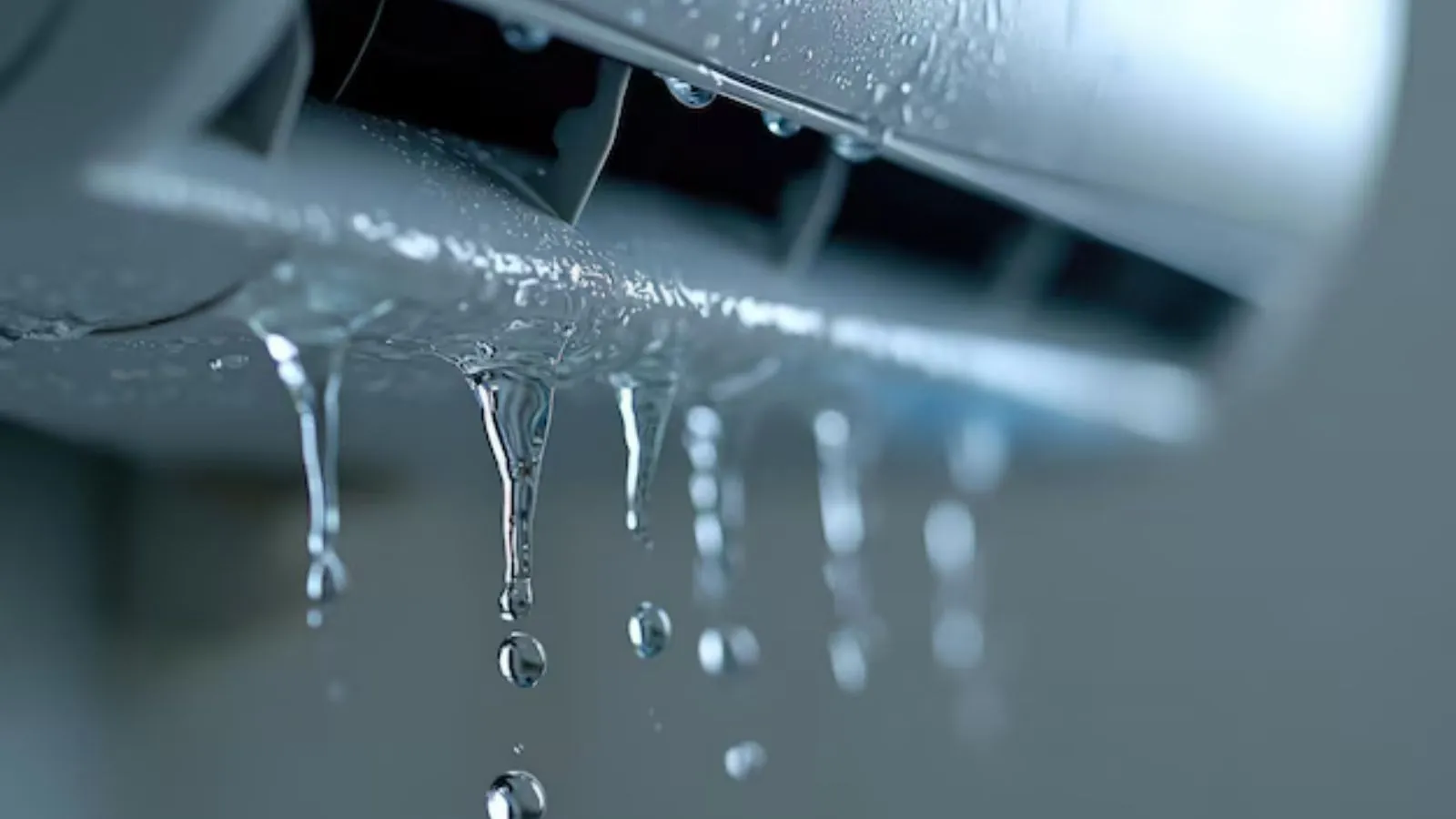
AC Leak Water Damage Repair in Mastic, NY.
Air conditioners make water all summer, and when the drain backs up, that water ends up in your ceiling or floor. Here is how the damage is handled.
An air conditioner pulls moisture out of the air and sends it down a condensate line. When that line clogs, or a drain pan cracks, the water goes into the ceiling, the wall or the floor under the unit. The line is answered 24/7 if water is actively dripping, and the first step is to switch the system off at the thermostat and the breaker.
Place a bucket under any drip and take photos of the water, the unit and the stain. Do not keep running the system, because it will keep producing water.
AC leaks are usually slow, which is why the damage tends to be larger than the visible stain. This page explains how the water is traced, dried and repaired.
How an AC System Produces Water.
Cooling coils run colder than the air around them, so moisture in the air condenses on the coil. The water drips into a pan and drains through a plastic line to a floor drain, a pump or the outdoors.
In humid Long Island summers, the system can produce several gallons of water per day. Even a small restriction in the line can send that volume over the lip of the pan.
Common Causes of an AC Leak.
Clogged condensate line.
Algae and debris block the line so water backs up and overflows the pan.
Cracked or rusted drain pan.
Older pans corrode and leak through the bottom.
Failed condensate pump.
A pump that stops running lets the reservoir fill and spill.
Frozen evaporator coil.
A coil that ices up melts all at once and overwhelms the pan.
AC dripping into the house?
Call the 24/7 line. We will explain shutdown and what to photograph.
Where the Damage Shows Up.
An air handler in an attic or closet pushes water into the ceiling below, where it shows as brown stains and sagging drywall. A unit in a basement or utility room soaks the floor and the wall base. Window units leak down the exterior wall or into the sill.
Water collects in insulation, which holds moisture for a long time. Check that area with a meter and see ceiling water damage repair if drywall has already stained or sagged.
How We Handle It.
Shut down the system.
Switch off the unit so it stops adding water.
Find the wet area.
Moisture meters and thermal imaging show how far water has traveled.
Remove and dry.
Wet insulation and damaged drywall are removed, and air movers and dehumidifiers dry the area.
Repair.
Drywall, paint and trim are restored after readings are normal.
An HVAC technician fixes the cause, such as clearing the line or replacing the pan. We dry the structure and restore finishes. If the leak ran for weeks, the area is checked for mold before closing the wall.
Preventing a Repeat.
Have the condensate line cleared at the start of cooling season and install a float switch that cuts power when the pan fills. Keep a wet pan under the air handler in the attic, and look at it a few times each summer.
If the same stain returns, the source has not been fixed.
Window Units, Mini Splits and Ductless Systems.
Not every air conditioner has a central drain. Window units drip outside when mounted with a slight downward tilt toward the exterior, and leak inside when they are level or tilted the wrong way. Ductless mini split heads drain through a small tube that can clog or kink.
If a mini split leaks from the indoor head, check that the tube is not pinched, and look for water running down the wall below it. Persistent drips stain the wall and soak the drywall behind it, and wall and drywall water damage repair covers how that is handled.
What Changes the Scope and Cost.
Time of the leak.
A slow leak across a season involves more wet material.
Location of the unit.
An attic unit affects the ceiling below, while a basement unit affects floors.
Insulation.
Wet insulation is removed and replaced.
Finishes.
Painting and ceiling texture are separate from drying.
What To Do Before a Crew Arrives.
- Shut off the water supply if you can reach the valve safely.
- Do not touch outlets, cords or appliances while standing in water.
- Do not enter a room with a sagging or bulging ceiling.
- Photograph the damage before moving anything.
- Move small valuables and papers to a dry shelf, then call the line.
Reference Standards.
The ANSI/IICRC S500 is the published standard for professional water damage restoration, and it defines water categories 1 to 3 by how contaminated the source is. We cite it as a reference for AC Leak Water Damage Repair and not as a claim about any certification. The EPA advises drying water damaged materials within 24 to 48 hours to limit mold growth.
Questions About AC Leak Water Damage Repair in Mastic.
Condensate from the unit is likely overflowing or leaking and soaking the ceiling. Shut the system off, photograph the stain and call.
Many homeowners flush it with a wet vacuum or a vinegar solution. A technician checks the pan and the pump so the problem does not return.
Sudden leaks are sometimes covered, gradual ones often are not. Your policy decides, so ask your insurer.
No. An HVAC technician repairs the system. We dry the structure and repair finishes.
Wet insulation and drywall for more than a day or two raise the risk. A technician checks readings and the area before it is closed.
An AC leak keeps feeding the damage.
Call and we will dry the wet area and restore finishes.
Call (934) 223-1875.