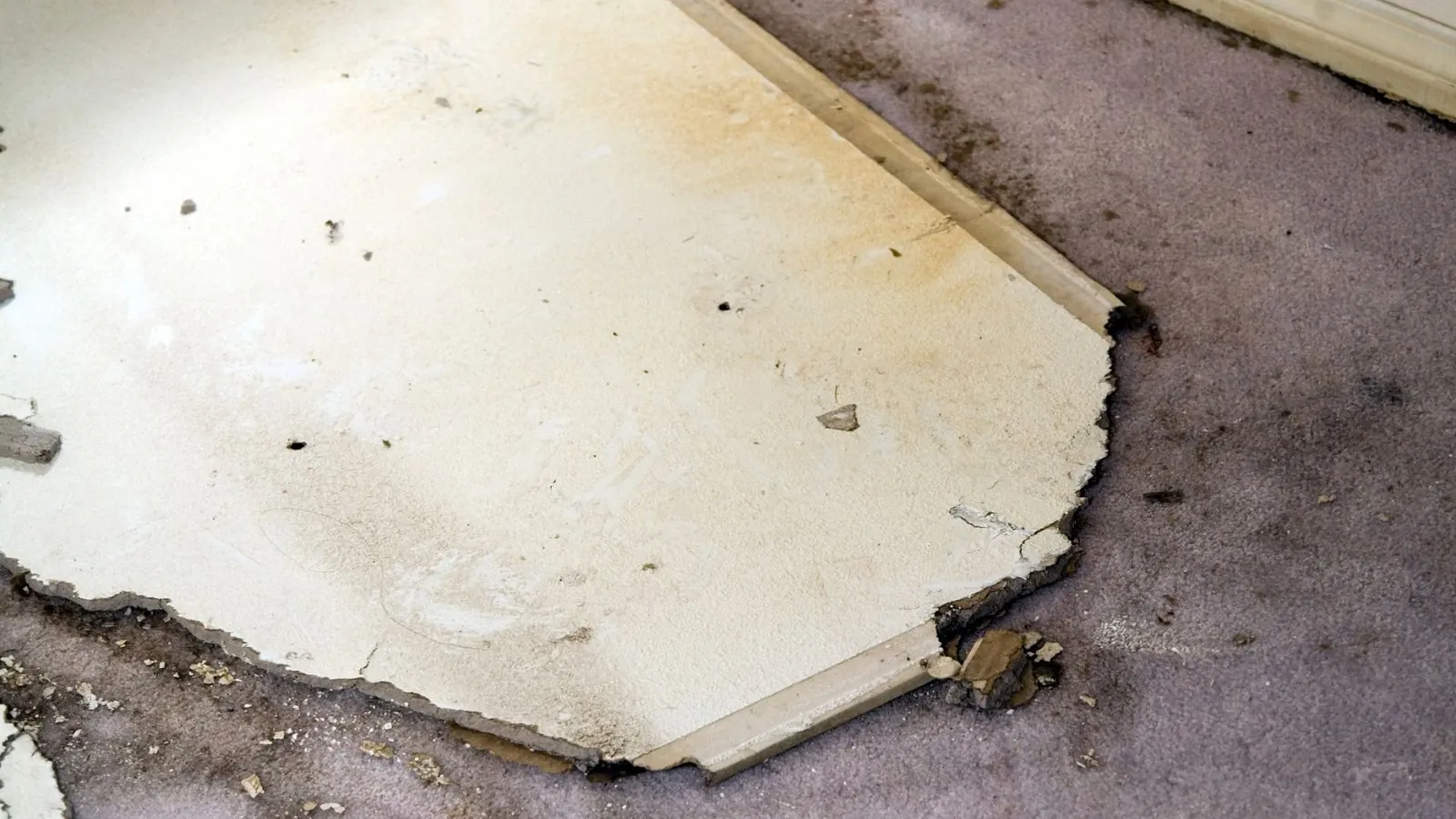
Carpet sits over a pad, and that pad is the problem. It acts like a sponge, holds water for days and keeps the subfloor wet underneath.
If carpet is soaked, lift furniture off it, open windows if weather permits, and photograph the area. Do not walk over saturated carpet more than needed because it can stretch and push water into the subfloor.
This page explains how the decision to save or replace carpet is made, and how drying and repair work.
Saving Carpet or Replacing It.
Carpet can often be saved when the water was clean, extraction began promptly and the carpet was not bonded to the floor. Contaminated water changes that. Sewage and flood water mean carpet and pad are usually discarded.
Carpet that has been wet a long time may develop odor and delamination. A technician checks the backing, the pad and the water category before giving an opinion.
Why Padding Matters.
Pad is the layer that absorbs the most water, and it is also the hardest to dry. Many jobs replace the pad and keep the carpet, since new pad is a small part of the cost compared with new carpet.
To dry carpet in place, technicians lift a corner, pull the pad and use air movers to push air under the carpet. This is called floating the carpet.
Carpet soaked?
Call the 24/7 line. We will explain what to do and what to photograph.
How Drying Works.
Extract.
Truck-mounted or portable units extract water from the carpet and pad. See water extraction.
Pull the pad.
Wet pad is removed and discarded.
Float and dry.
Carpet is lifted and air movers dry the back of it and the subfloor.
Re-stretch and reinstall.
Dry carpet is stretched and reinstalled over new pad.
Moisture readings on the subfloor show when the floor is dry. If carpet cannot be dried in a reasonable time, replacement is the better option.
Carpet on Concrete and Over Wood.
Carpet over a concrete slab holds moisture against the concrete, which dries slowly. Carpet over wood subfloor may involve checking joist and subfloor moisture. See basement water damage cleanup for carpet in lower levels.
We explain what is wet, what can stay and what must come out as part of the assessment.
Repair and Replacement.
If carpet must go, new carpet, pad and tack strips are installed after the subfloor is dry. Color matching is a common concern when only one room is replaced. We explain options such as replacing a connected area for a uniform look.
Scope and price are explained before work starts.
Carpet Odors After a Water Loss.
Wet carpet and pad often develop an odor within a day. The smell comes from bacteria and from moisture trapped in the backing, and it can linger after the surface looks dry. A smell that returns when humidity rises usually means there is still moisture under the carpet.
Cleaning products can mask an odor without removing the cause. Technicians find the wet area first, dry it, and then clean the carpet. If odor remains, the pad or the subfloor is usually the source, and replacing the pad often solves it.
Carpet that smells musty and has been wet for several days should be checked for mold growth on the back and on the tack strips. Mold remediation explains how New York licensing applies if growth is found. We do not make health claims, and we do not promise that an odor will disappear without addressing moisture.
What Changes the Scope and Cost.
Water category.
Clean water allows more recovery than contaminated water.
Area.
Larger rooms need more equipment.
Carpet and pad type.
Older or glued carpet is harder to dry.
Subfloor.
Concrete and wood dry at different rates.
Reference Standards.
The ANSI/IICRC S500 is the published standard for professional water damage restoration, and it defines water categories 1 to 3 by how contaminated the source is. We cite it as a reference for Carpet Water Damage Restoration and not as a claim about any certification. The EPA advises drying water damaged materials within 24 to 48 hours to limit mold growth.
Questions About Carpet Water Damage Restoration in Mastic.
Often, when the water was clean and carpet was extracted promptly. Contaminated water generally means replacement.
Usually yes. Pad holds water and is inexpensive compared with carpet.
The longer it stays wet, the greater the risk of odor and mold. The EPA suggests drying within 24 to 48 hours.
Fans move air but do not extract water or check the subfloor. A meter shows whether the area is actually dry.
Sudden leaks are often covered. Your policy decides, so ask your insurer.
Wet carpet hides water in the pad.
Call and we will check what is wet and what can be saved.
Call (934) 223-1875.