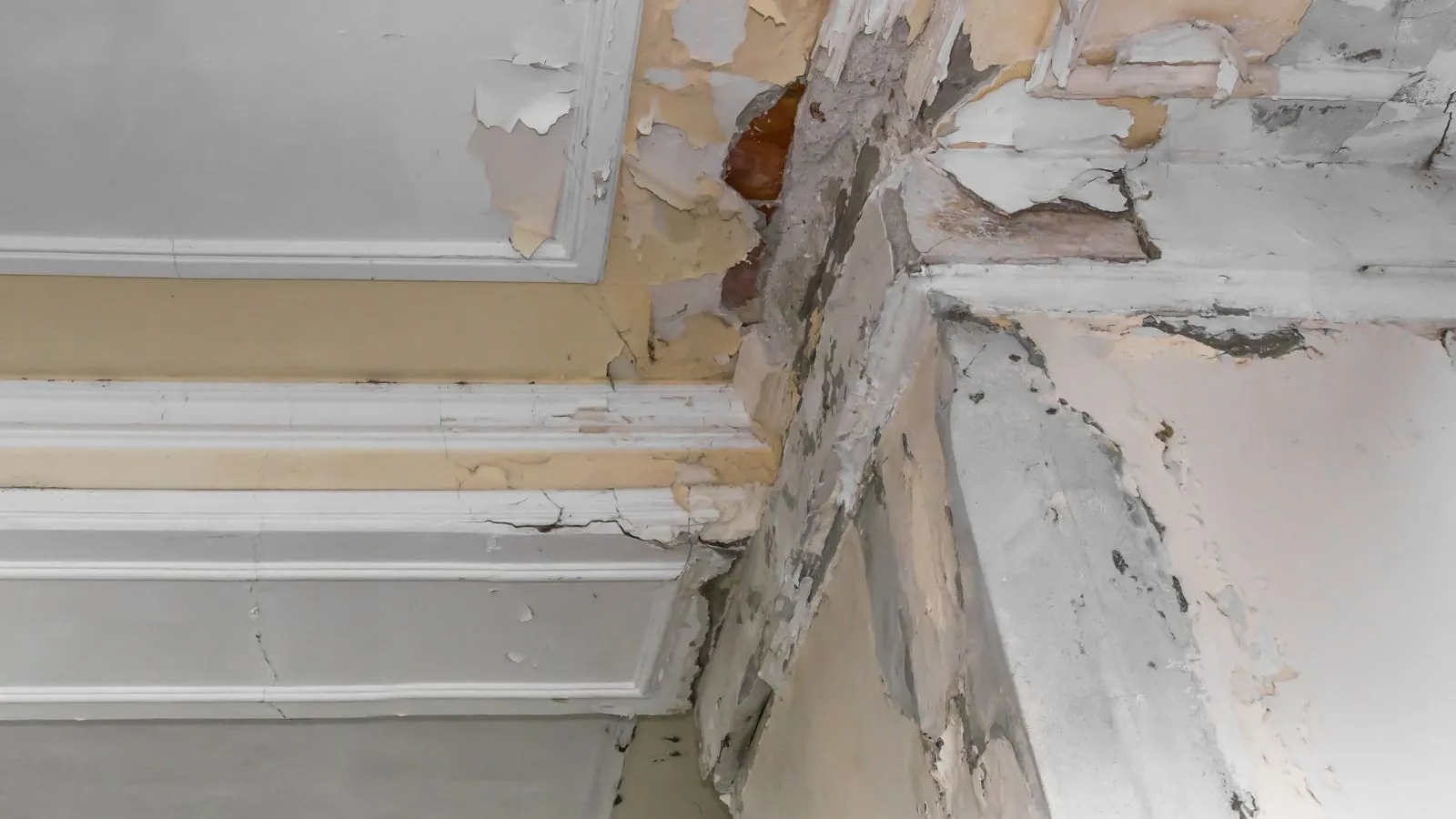
Emergency Ceiling Water Damage Repair in Mastic, NY.
A stained or sagging ceiling means water is trapped above it. Here is how to stay safe and how the repair is done in Mastic homes.
A wet ceiling is a 24/7 emergency because the water above it can drop without warning, and the Mastic line is answered at all hours. Keep people and pets out from underneath any sagging or bulging area.
If it is safe, place a bucket and poke a small hole in the lowest point of the bulge so trapped water drains in a controlled way. Turn off the lights on that circuit and take photos before anything moves.
This page explains how ceiling water damage is traced, dried and repaired. It also covers roof leaks that show up as ceiling stains, which is a different problem from a plumbing leak.
Once the roof is sealed, the interior work moves to walls and drywall, and after a major weather event see our storm damage page.
Emergency Signs in a Wet Ceiling.
Brown rings.
Rings that grow after each rain suggest a roof or flashing leak.
Stain under a bathroom.
A stain beneath a bathroom or laundry room often traces to a supply, drain or fixture above.
Sagging or bubbling paint.
Water is held in the drywall or paint and can fall when disturbed.
Drips from a light fixture.
Water is moving through the ceiling cavity and toward the electrical box. Turn off the circuit.
How the Source Is Traced.
The stain is rarely directly below the source. Water travels along joists and pipes before it shows up on the drywall. A technician uses a moisture meter and, where useful, thermal imaging to see the wet area before opening anything.
Once the source is found, it is either a plumbing problem for a plumber, a roof problem for a roofer, or an appliance or condensate line problem. We handle the water damage that follows, not the roof or pipe repair.
Ceiling sagging or dripping?
Call the 24/7 line. We will walk you through safe steps and what to photograph.
Roof Leaks That Appear as Ceiling Damage.
Many ceiling stains in Mastic trace to the roof. Wind driven rain can get under shingles, around chimneys and past flashing at skylights and vents. The water then runs down the underside of the roof deck and soaks insulation before it reaches the ceiling.
A roofer fixes the opening. We dry what got wet, remove saturated insulation and drywall, and document the damage for your insurer. A storm that damages shingles may also point toward storm water damage cleanup for other areas of the house.
If the same spot stains after every heavy rain, treat the roof as the source until a roofer proves otherwise. Do not wait for the next storm to learn what it is.
How the Repair Is Handled.
Contain and protect.
Floors and furniture are covered, and water is controlled below the stain.
Open and dry.
Wet drywall and insulation are removed so the cavity can dry. Air movers and dehumidifiers run until readings are normal.
Check for mold risk.
Any visible growth is noted and handled according to mold remediation practice.
Repair the ceiling.
Drywall, taping, texture and paint are restored once the structure is dry.
Insurance and Documentation.
Photograph the stain, the room and any damaged belongings. Note when you first saw it and how it changed. If a roofer or plumber finds the cause, keep that written finding for your claim file.
Whether a ceiling loss is covered depends on the cause and your policy. A sudden pipe failure is treated differently from long term seepage. Your insurer decides, and we do not promise approval.
What Changes the Scope and Cost.
Area and ceiling type.
A small plaster or drywall patch is a smaller job than a full ceiling.
Insulation.
Wet insulation must come out and be replaced.
Source of the water.
The source repair is separate from the damage repair.
Finish and texture.
Matching a textured ceiling takes extra steps.
What To Do Before a Crew Arrives.
- Shut off the water supply if you can reach the valve safely.
- Do not touch outlets, cords or appliances while standing in water.
- Do not enter a room with a sagging or bulging ceiling.
- Photograph the damage before moving anything.
- Move small valuables and papers to a dry shelf, then call the line.
Reference Standards.
The ANSI/IICRC S500 is the published standard for professional water damage restoration, and it defines water categories 1 to 3 by how contaminated the source is. We cite it as a reference for Ceiling Water Damage Repair and not as a claim about any certification. The EPA advises drying water damaged materials within 24 to 48 hours to limit mold growth.
Questions About Ceiling Water Damage Repair in Mastic.
Yes. We answer the line 24 hours a day, every day. A sagging or dripping ceiling is treated as an emergency.
Sometimes. Small stains on dry, intact drywall may be sealed and painted once the source is fixed. Sagging, soft or repeatedly wet drywall is usually replaced.
No. A roofer fixes the roof. We handle the drying, insulation, drywall and documentation that follow.
You cannot tell by looking at paint. A technician checks with a meter and may open the area. Mold concerns are covered in our mold remediation work.
It depends on the cause and the policy. Keep photos and any roofer or plumber findings, and ask your insurer.
A wet ceiling can fall without warning.
Call now and we will plan containment, drying and repair.
Call (934) 223-1875.