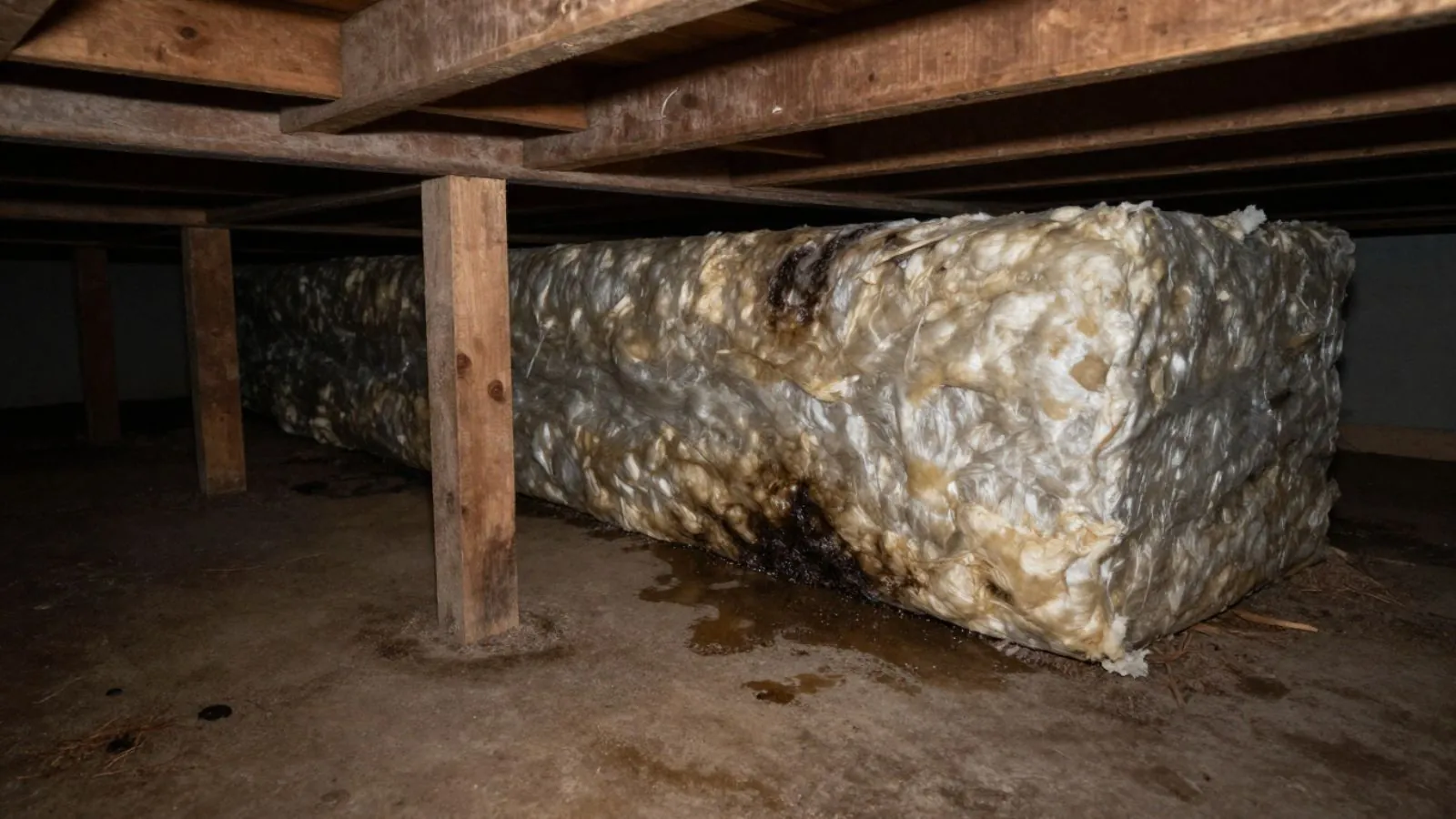
A crawl space is an unfinished area between the ground and the first floor, and it rarely gets a second glance until something goes wrong. Water can enter from a broken pipe, a drain that backs up, or soil that is saturated after heavy rain.
Call the 24/7 line if you see standing water, a musty smell rising through the floor, or insulation hanging down. Stay out of any crawl space with water until power is off, because wiring and equipment may be wet.
This page explains why crawl space moisture matters, how water is removed from tight spaces, and what documentation is useful.
Why Crawl Space Water Matters to the Whole House.
Moisture in the crawl space rises into the subfloor, joists and flooring above it. Wood absorbs it, insulation holds it, and the air in the house can pick up the smell.
Wet soil, standing water and wet insulation also give mold an environment to grow. Mastic is low lying, about 30 feet above sea level, with the Forge River along its southern end, so storm water and saturated soil are realistic sources.
Signs of a Wet Crawl Space.
Musty smell indoors.
A damp odor in the first floor that gets stronger after rain.
Sagging insulation.
Fiberglass batts hang down or sit in water because they absorbed moisture.
Cupped or soft floors.
Wood flooring warps or the subfloor feels soft.
Visible water or wet soil.
Pools, puddles or dark soil under the house.
Water under the house?
Call the 24/7 line. We will explain safe steps and how pumping works.
How Water Gets Out of a Tight Space.
Technicians use small submersible pumps and hoses, and work on plastic sheeting to protect the area. If the space is too tight for a person, equipment is placed at the access point.
After extraction, damaged insulation is removed and discarded. Air movers and dehumidifiers dry the framing, and moisture meters check the joists and subfloor. See water extraction for the method used on standing water.
Fixing the Source Is a Separate Job.
Restoration dries and cleans the space. It does not waterproof it. If water keeps entering, you need a contractor to address drainage, grading or a sump system. We explain that difference during the assessment so you do not expect drying to fix an ongoing entry point.
If the water came from a plumbing failure, a plumber repairs the pipe and we dry what got wet. See burst pipe water damage for that sequence.
Mold Risk in Crawl Spaces.
Visible growth on joists or subfloor is a sign to stop and have the area assessed before any cleanup. For a mold project larger than 10 square feet, New York requires licensed professionals under Article 32 of the Labor Law. See mold remediation for how that is handled.
Insulation and Vapor Barriers After a Wet Crawl Space.
Fiberglass insulation between floor joists holds water and drops away from the subfloor when wet. It no longer insulates, and it keeps the wood above it damp. Technicians remove wet batts, bag them and dry the framing before anything new goes in.
A vapor barrier is plastic sheeting laid over the soil to slow moisture rising from the ground. If it has been torn or buried by water and debris, it may need to be replaced. Whether to add or replace it is a decision for the owner and a contractor, and we explain what we see during the assessment.
After drying, readings on the joists and subfloor tell you whether the space is back to normal. If moisture keeps returning, the cause is likely drainage or ventilation. Basement water damage cleanup covers a similar problem in finished lower levels.
What Changes the Scope and Cost.
Water depth.
Several inches of water is more work than damp soil.
Access.
A small hatch and a low clearance slow down work.
Insulation and vapor barrier.
Wet insulation and ground sheeting may need replacement.
Contamination.
Water from a drain or sewer line changes the safety steps.
Reference Standards.
The ANSI/IICRC S500 is the published standard for professional water damage restoration, and it defines water categories 1 to 3 by how contaminated the source is. We cite it as a reference for Crawl Space Water Damage and not as a claim about any certification. The EPA advises drying water damaged materials within 24 to 48 hours to limit mold growth.
Questions About Crawl Space Water Damage in Mastic.
Standing water and a musty smell warrant a quick call. Water under the house keeps feeding the floor above.
Wet fiberglass insulation usually must be removed because it holds water. Technicians check each section.
No. Drying removes the water that is there. If water keeps entering, the source needs a separate repair.
In New York, a licensed assessor evaluates a mold project over 10 square feet and a separate licensed remediator handles removal. Ask the assessor what testing, if any, the plan needs.
Coverage depends on the source and the policy. Sudden pipe failures are treated differently from groundwater. Ask your insurer.
Moisture under the house moves upward.
Call and we will explain pumping, drying and what comes next.
Call (934) 223-1875.