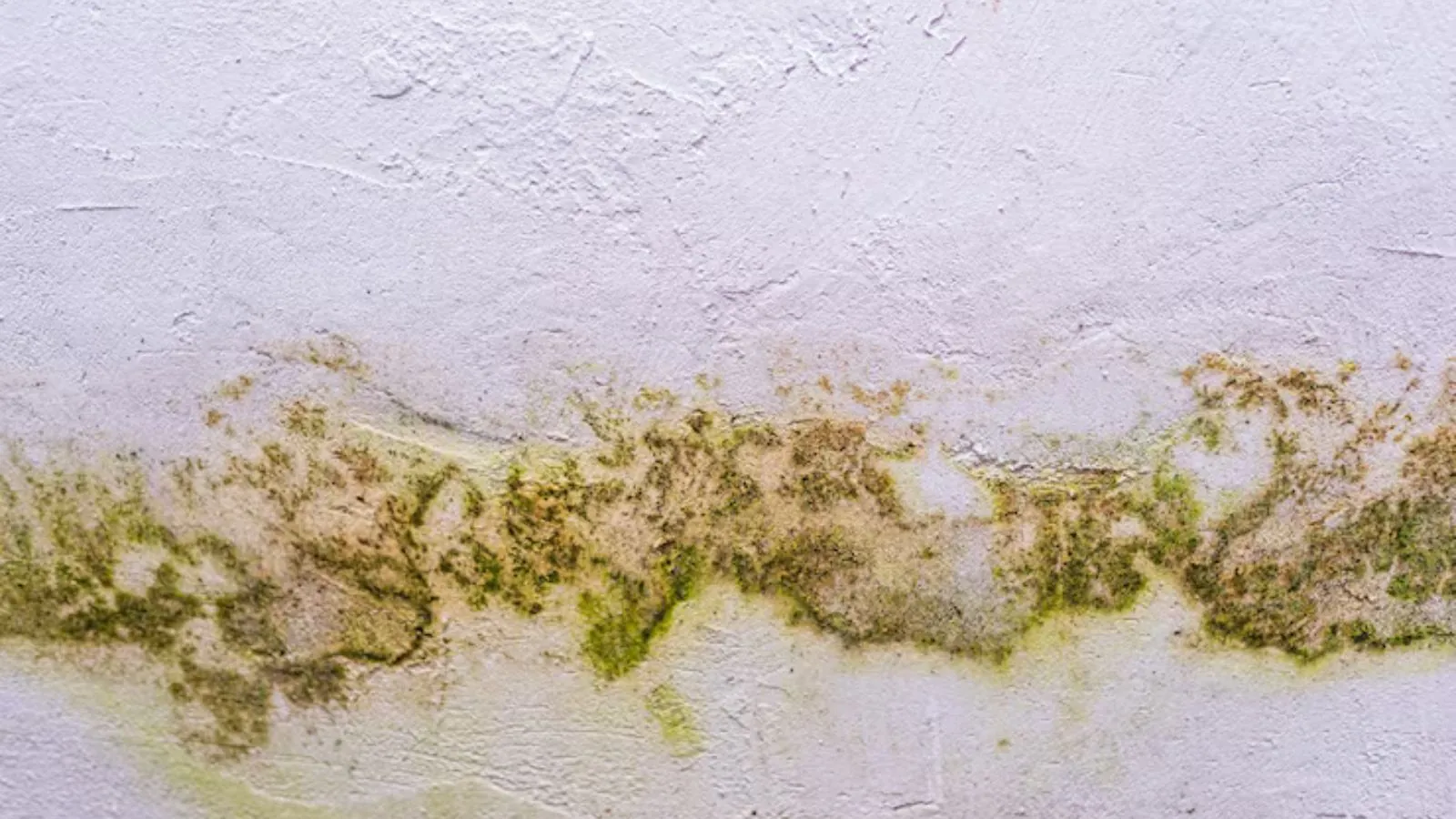
Mold Remediation in Mastic, NY.
Mold follows moisture. Here is how inspection, testing, containment, removal and clearance work in New York, and what to ask before hiring anyone.
Mold grows where moisture lingers. After a leak, flood or humid spell, building materials stay damp, and growth can start within a day or two on porous surfaces. The EPA advises drying water damaged materials within 24 to 48 hours.
If you see growth, stop and do not scrub or spray it dry. Brushing spreads spores, and bleach does not solve a moisture problem. Turn off fans that move air through the area and shut off the water source.
This page explains how New York regulates mold work, what inspection and testing mean, how containment and removal proceed, and how to verify the work.
Why Do I Smell Something Musty but See Nothing?
Musty odor.
A musty smell without visible growth often means moisture is trapped behind a wall, under flooring or above a ceiling.
Stains and peeling paint.
Brown rings, peeling paint and bubbling wallpaper point to moisture.
Past water damage.
Any area that leaked or flooded and was not dried fully is suspect.
Persistent condensation.
Windows that stay wet and rooms that feel clammy show moisture in the air.
A smell is a reason to look, not a diagnosis. A licensed mold assessor can find the source and the extent of the problem.
How New York Regulates Mold Work.
Article 32 of the New York Labor Law requires licensing for mold assessors, mold remediation contractors and mold abatement workers on projects larger than 10 square feet. The New York State Department of Labor offers a search tool to look up licensed contractors.
The law does not require a homeowner to clean up mold, and areas under 10 square feet fall outside it. The moisture behind the growth still has to be fixed, or the mold will return to the same spot.
The law also separates roles. A licensed contractor may not both assess and remediate the same property. That separation keeps the person who says what is wrong from being the same person who is paid to fix it.
Seeing or smelling mold?
Call the 24/7 line. We will explain the next step and who to involve.
Mold Inspection and Testing.
A mold assessment starts with a visual inspection and moisture readings. A licensed assessor may take samples to identify the type and concentration, and writes a protocol that describes the work. Testing does not tell you what to feel about the result. It tells you where growth is and what is needed.
| Step. | Who does it. | What it produces. |
|---|---|---|
| Inspection and moisture survey. | Licensed mold assessor. | Findings on where moisture and growth are. |
| Sampling, if needed. | Licensed mold assessor. | Lab results on spores and type. |
| Remediation protocol. | Licensed mold assessor. | Written scope for removal. |
| Removal. | Licensed remediation contractor. | Cleaned and dried area. |
| Post-remediation clearance. | Licensed mold assessor. | Written clearance results. |
Roles are kept separate under New York law.
Containment, Removal and Drying.
Fix the moisture.
Mold returns if the water source remains. The leak or condensation is repaired first.
Contain.
Plastic barriers and negative air machines with HEPA filtration keep spores from spreading.
Remove.
Affected porous materials are removed and bagged. Hard surfaces are cleaned.
Dry and verify.
Equipment dries the area, and an assessor checks that the work met the protocol.
Wet materials from a water loss are dealt with as part of structural drying. Where the water came from a pipe or a storm, see burst pipe water damage and flood damage restoration.
Mold Clearance for a Home Sale or Loan.
A buyer, lender or insurer may ask for documentation that mold was addressed. That is usually a clearance report written by a licensed mold assessor after remediation. A contractor's own statement is not a substitute.
If you plan to sell or refinance, ask the assessor what the report must include and keep it with your records.
Questions To Ask Before You Hire.
- Ask to see the license and look it up on the Department of Labor site.
- Ask whether the contractor assesses and remediates the same job. That is not allowed on one property.
- Ask for a written scope and price before work starts.
- Ask how containment will be set up and how air will be filtered.
- Ask what clearance testing will follow and who performs it.
What Changes the Scope and Cost.
Area affected.
Larger areas need larger containment.
Materials.
Porous materials such as drywall and insulation are removed, and wood may be cleaned.
Moisture source.
The leak repair is separate from remediation.
Assessment and testing.
Inspection, sampling and clearance are separate services.
Reference Standards.
The ANSI/IICRC S520 is the published standard for professional mold remediation, and New York Labor Law Article 32 sets the licensing rules for projects over 10 square feet. We cite both as references for Mold Remediation. They describe how the work is planned and who may do it, and they are not a claim about any certification.
Questions About Mold Remediation in Mastic.
Moisture may be trapped behind a wall, under flooring or above a ceiling. A licensed assessor can find it.
For a mold project larger than 10 square feet, New York requires licensed assessors, remediation contractors and abatement workers under Article 32 of the Labor Law. Smaller areas fall outside the law, though the moisture still needs fixing. Check any contractor on the Department of Labor site.
Bleach does not address moisture, and scrubbing can spread spores. Small areas on hard surfaces may be handled by a homeowner, and larger or hidden areas need a professional.
It is a report from a licensed assessor after remediation, showing the area meets the protocol. Buyers and lenders often ask for it.
Mold coverage varies by policy and cause. It is often limited or excluded. Ask your insurer before work begins.
Mold follows moisture.
Call and we will explain inspection, testing and the next steps.
Call (934) 223-1875.