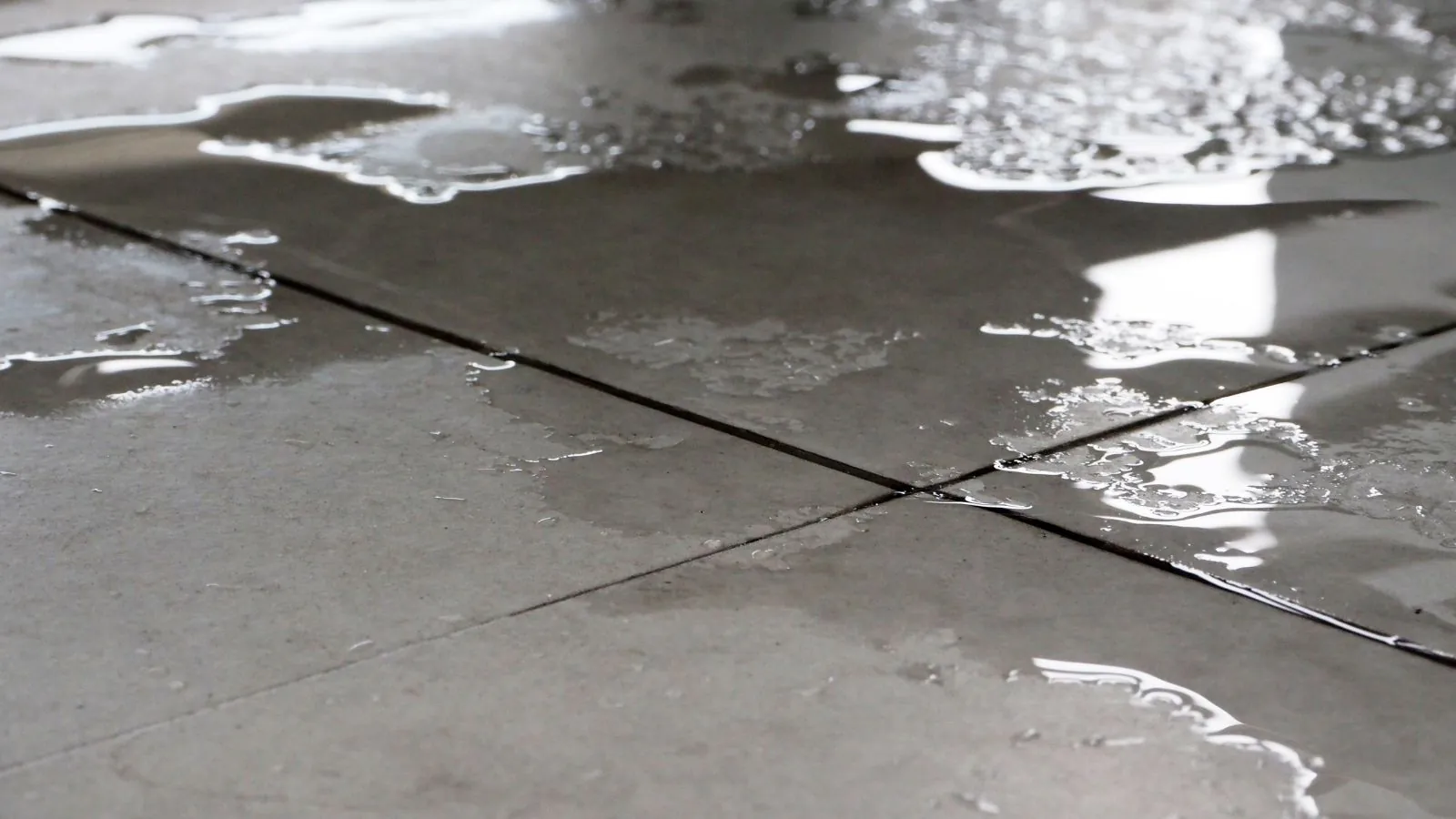
A commercial water loss is a 24/7 emergency because every hour of downtime costs a business money, and the Mastic line answers around the clock. If water is spreading, shut off the water supply to the affected area, cut power to wet circuits and move inventory off the floor.
Photograph the damage, note which tenants or units are affected and call your property manager or landlord. Do not allow customers or staff into wet areas.
Commercial losses differ from homes because of larger spaces, shared walls, business hours and multiple parties. This page covers how that is handled and what to document.
Emergency Steps for Business Owners.
Stop the water.
Close the supply valve for the area or the main valve if you cannot find it.
Secure power.
Turn off breakers for wet areas and keep staff away from electrical equipment.
Protect inventory.
Lift stock, records and equipment off the floor and photograph them.
Call the line.
We explain what to leave in place, what to move and what to document.
What Makes Commercial Losses Different.
Commercial spaces tend to be larger and more open, with concrete or tile floors over slab. Shared walls and ceilings mean water can pass between units. Operating hours and customer traffic affect when work can happen.
Landlords, tenants, property managers and insurers may all be involved. Establishing who is responsible for which area early avoids delays later on.
Water in your business?
Call the 24/7 line. We will explain safety steps and documentation.
Common Commercial Sources.
Plumbing and fixtures.
Restroom supply lines, toilets and sinks fail in shared spaces.
Fire sprinkler and HVAC.
Sprinkler discharge and air handler drain lines release water into ceilings.
Roof and storm intrusion.
Flat roofs and drains let water in during heavy rain. See storm water damage cleanup.
Sewer and drain backup.
Floor drains back up in restaurants and shops. See sewage backup cleanup.
Large Loss and Insurance.
A larger commercial loss may involve a commercial property policy, and possibly business interruption coverage. Coverage varies by policy and the cause of loss. We do not decide coverage.
We keep photos, moisture readings and equipment logs, and we write a scope that can be shared with an adjuster. If a claim is denied, the insurer should explain the reason with reference to policy language.
How Drying Works in Larger Spaces.
Large open floors dry differently from rooms in a house. More air movers and dehumidifiers are needed, and drying zones may be set up so unaffected areas stay open. Technicians record readings by zone.
Flooring such as carpet tile, vinyl and sealed concrete is checked for trapped moisture. For details on the process, see structural drying and dehumidification.
Documentation for a Business Loss.
A business owner needs records an adjuster will accept. Start with photographs of the damage, the date and time you found it, and the name of anyone who saw it. Keep a list of inventory, equipment and fixtures that were wet, with purchase dates if you have them.
Save invoices from plumbers, electricians and any emergency repair. Keep a log of hours the business was closed or limited, since that supports a business interruption claim if you carry that coverage. Your lease may also say who is responsible for which part of the space.
Our scope describes the drying work, the equipment used and the materials removed. For smaller losses that begin inside a wall, wall and drywall water damage repair explains how that work is staged.
What Changes the Scope and Cost.
Square footage.
Larger areas need more equipment and staff.
Hours of access.
After hours work may be needed to keep a business open.
Materials.
Ceiling tile, carpet tile and drywall need different handling.
Number of parties.
Tenants and landlords may split responsibility.
Reference Standards.
The ANSI/IICRC S500 is the published standard for professional water damage restoration, and it defines water categories 1 to 3 by how contaminated the source is. We cite it as a reference for Commercial Water Damage and not as a claim about any certification. The EPA advises drying water damaged materials within 24 to 48 hours to limit mold growth.
Questions About Commercial Water Damage in Mastic.
Yes. We answer 24 hours a day, every day, including holidays. Shut off the water and call.
Often yes. Tell us your hours when you call, and the scope can be planned to limit disruption.
Yes. We document the loss in a way that can be shared with a manager, landlord or adjuster.
A commercial property policy may apply, and business interruption coverage may be separate. We keep records, and the insurer decides coverage.
We handle water damage restoration. Repairs to plumbing, roofing or electrical systems are done by licensed trades.
Every hour of downtime costs a business.
Call now and we will plan extraction, drying and documentation.
Call (934) 223-1875.