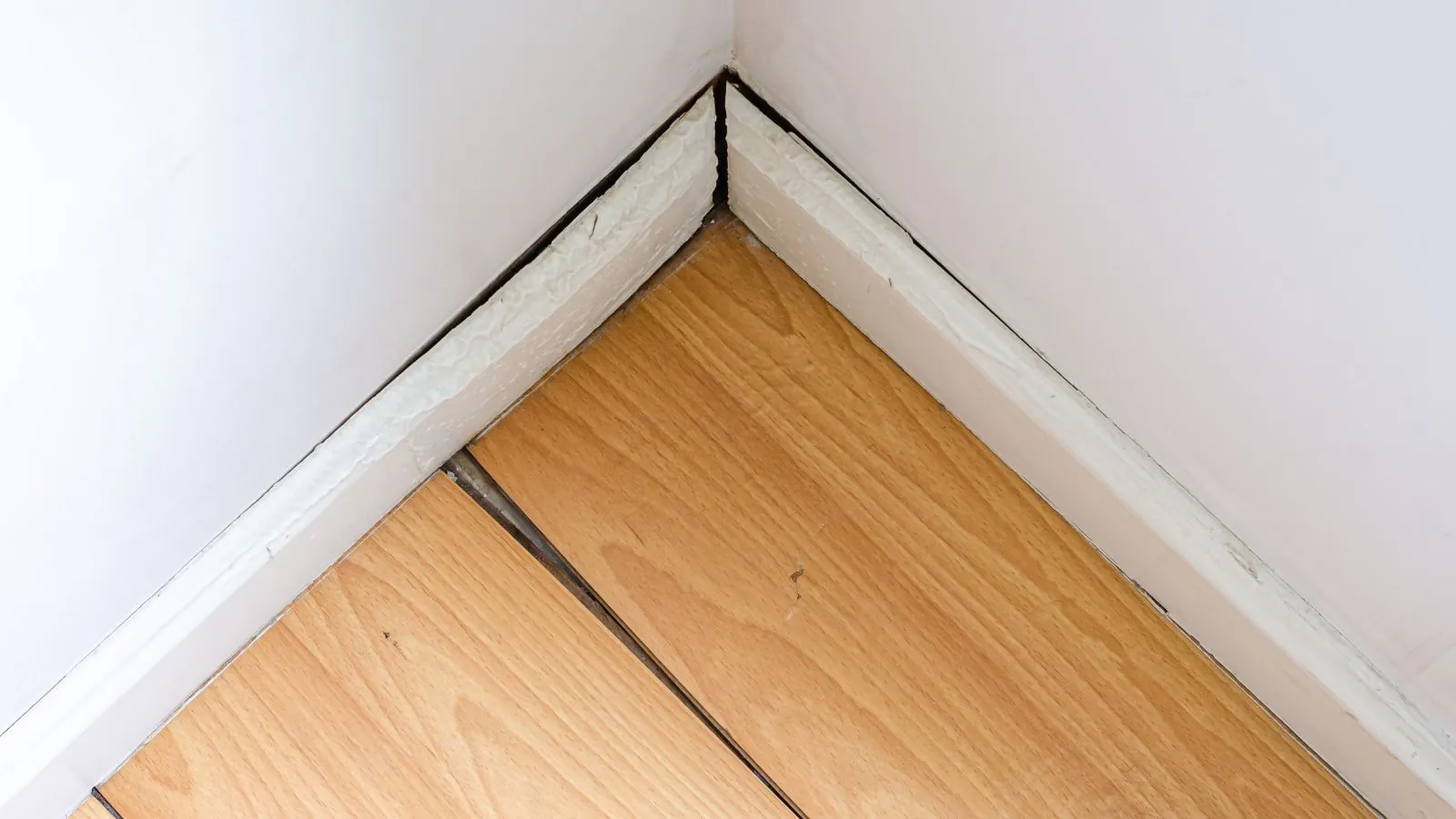
Wood flooring reacts to water within hours. Boards absorb moisture, swell and push against each other, so a floor that looked fine after a leak may be cupped by the weekend.
Wipe standing water, lift area rugs and furniture, and photograph the floor. Do not use heat guns or sanders, because they can set damage and make the floor harder to dry.
This page explains how wet hardwood is assessed, dried and repaired in Mastic homes, and when replacement makes more sense.
Signs of Water in a Wood Floor.
Cupping.
Edges of boards rise higher than the center because moisture entered from below.
Crowning.
The center of a board rises after a floor was sanded while still wet.
Buckling.
Boards lift off the subfloor and may separate from each other.
Gaps and staining.
Shrinking leaves gaps, and dark stains mean water has been present for some time.
Solid, Engineered and Laminate Floors.
Solid hardwood is most forgiving because it can be dried and sanded, but it moves a lot. Engineered flooring has a thin top layer over plywood, and delaminates if soaked. Laminate swells at the edges and rarely recovers.
A technician identifies the flooring type and checks the moisture content with a meter. Readings show whether a floor can be dried in place or must be removed.
Wood floor cupping after a leak?
Call the 24/7 line. We will explain what to do before drying.
Drying Hardwood Floors.
Dry from below and above.
Mats and air movers draw moisture out of the board and the joint.
Monitor readings.
Moisture readings are taken each visit until they match reference values.
Decide repair or replace.
Once dry, boards that remain cupped or damaged are repaired or replaced.
Drying can take days to weeks for dense wood. Rushing the process or sanding too early often leads to cupping or crowning later.
Repair Options After Drying.
Mild cupping often flattens as the floor dries, and a light sanding and refinish restores the surface. Buckled or delaminated boards are replaced in sections. Matching the stain and grain of an old floor takes care.
The scope depends on how much of the floor is affected and how it connects to the next room. We explain the options and what each involves before work begins.
Wood Floors and Moisture From Below.
Water from a slab or crawl space comes up through the subfloor instead of down from above. That moisture needs to stop before any floor is repaired. See slab leak water damage and crawl space water damage for those sources.
Protecting a Wood Floor While You Wait.
There are a few things you can do before drying begins. Remove standing water with towels or a wet vacuum, lift rugs and furniture legs, and keep the room well ventilated. Do not cover the floor with plastic, because that traps moisture.
Avoid walking on cupped or buckled boards, which can crack. Do not use a steam mop or a heat gun. Photograph the whole floor and note which rooms the boards run into, since repair often continues across a doorway.
If the water came from a leak above, such as a kitchen leak or a ceiling, tell the technician where it came from. That tells us which areas of the subfloor and wall base to test.
What Changes the Scope and Cost.
Floor type.
Solid wood is more recoverable than engineered or laminate.
Area.
Larger floors need more mats and equipment.
Time wet.
The longer water sat, the more likely boards must be replaced.
Finish.
Refinishing and matching stain are separate from drying.
Reference Standards.
The ANSI/IICRC S500 is the published standard for professional water damage restoration, and it defines water categories 1 to 3 by how contaminated the source is. We cite it as a reference for Hardwood Floor Water Damage Repair and not as a claim about any certification. The EPA advises drying water damaged materials within 24 to 48 hours to limit mold growth.
Questions About Hardwood Floor Water Damage Repair in Mastic.
Often yes, if it is dried promptly and the cupping is mild. A moisture meter shows whether the boards are drying evenly.
It depends on the species, thickness and how long it was wet. Technicians check readings and stop when the wood is dry.
No. Sanding before the wood is dry can lock in damage. Dry first, then decide.
Laminate often swells at the edges and rarely returns to its original shape. Replacement is common.
Sudden leaks are often covered, and long term seepage often is not. Your policy decides.