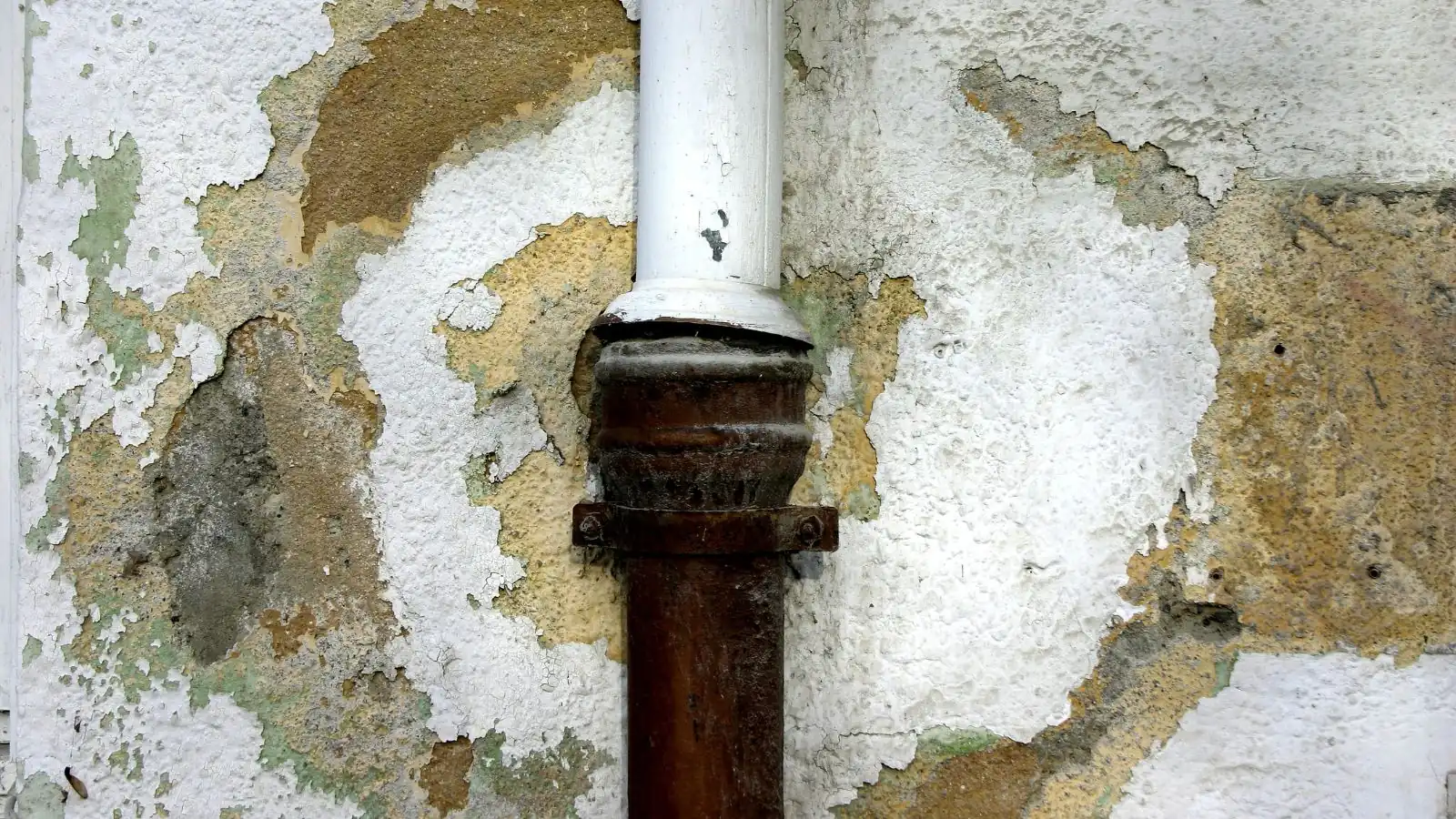
Drywall is made of gypsum between paper facings, and paper holds water. Wet walls soften, stain and bubble, and the cavity behind them can stay wet while the surface looks fine.
If a wall is wet, shut off the source, remove baseboards only if the wall is accessible, and photograph the stain. Do not paint over stains, because paint traps moisture and hides the problem.
This page explains how wet walls are tested, when they are dried in place and when they are cut out, and how repair is done.
How Water Moves Through a Wall.
Drywall wicks water upward, so a puddle on the floor can wet the wall a foot above it. Water travels down inside the cavity, along pipes and framing, and appears at a low point far from the source.
Insulation soaks up water and holds it. Moisture meters and thermal cameras show where water has gone before any wall is opened.
Dry in Place or Cut Out.
Dry in place.
Clean water, drywall still firm and no paint or wallpaper trapping moisture.
Cut and remove.
Drywall that is soft, crumbling or stained from contaminated water.
Remove insulation.
Wet fiberglass and cellulose insulation hold water and are usually replaced.
Flood cut.
A horizontal cut above the water line lets air reach the cavity.
The decision follows moisture readings. If a wall does not dry, it is opened.
Wall stained or soft?
Call the 24/7 line. We will explain testing and what to photograph.
How the Work Runs.
Find the wet area.
A meter and thermal camera map the extent.
Open as needed.
Baseboards come off and sections of drywall are cut out.
Dry the cavity.
Air movers and dehumidifiers dry framing and the remaining drywall. See structural drying.
Patch and finish.
New drywall is hung, taped, textured and painted.
Signs of Mold in Walls.
A musty smell, dark spots or peeling paint are common signs of moisture in a wall. Mold in a wall cavity should be assessed before demolition. See mold remediation for how New York licensing applies.
We do not make health claims about mold. If growth is visible, stop and call.
Repair and Finish Work.
Repair includes new drywall, tape and compound, texture matching and paint. Matching a textured wall takes skill, and the finish often needs to be blended across the full wall. We explain what is included before work starts.
Plumbing repair is done by a licensed plumber. See burst pipe water damage for how a pipe failure is handled.
Baseboards, Trim and Outlets Along a Wet Wall.
Baseboards and trim are often the first things to show water. They swell, split and pull away from the wall. Removing them lets air reach the bottom of the drywall and shows whether water got behind the wall.
Electrical outlets and switches in a wet wall are a safety concern. Do not use outlets that are in or near a wet wall, and turn off the breaker for that circuit. A licensed electrician should check wiring that was in contact with water before it is energized again.
Once a wall is dry, baseboards are replaced or reinstalled, outlets are reset and the wall is painted. See water heater leak cleanup for one common cause of wet wall bases in utility areas.
What Changes the Scope and Cost.
Wall area.
More wall means more drywall, tape and paint.
Insulation.
Wet insulation must be replaced.
Finish type.
Textured and painted walls take more time to match.
Water category.
Contaminated water changes the removal plan.
What To Do Before a Crew Arrives.
- Shut off the water supply if you can reach the valve safely.
- Do not touch outlets, cords or appliances while standing in water.
- Do not enter a room with a sagging or bulging ceiling.
- Photograph the damage before moving anything.
- Move small valuables and papers to a dry shelf, then call the line.
Reference Standards.
The ANSI/IICRC S500 is the published standard for professional water damage restoration, and it defines water categories 1 to 3 by how contaminated the source is. We cite it as a reference for Wall and Drywall Water Damage Repair and not as a claim about any certification. The EPA advises drying water damaged materials within 24 to 48 hours to limit mold growth.
Questions About Wall and Drywall Water Damage Repair in Mastic.
Sometimes, if the water was clean and the board is still firm. A moisture meter shows whether it is drying.
Paint can hide a stain but traps moisture if the wall is still wet. Fix the source and dry the wall first.
Technicians sample the existing texture and blend it. Matching is done during finishing.
Stop and call. A licensed professional should assess it before demolition.
Often for sudden losses. Your policy decides, and your insurer makes the call.