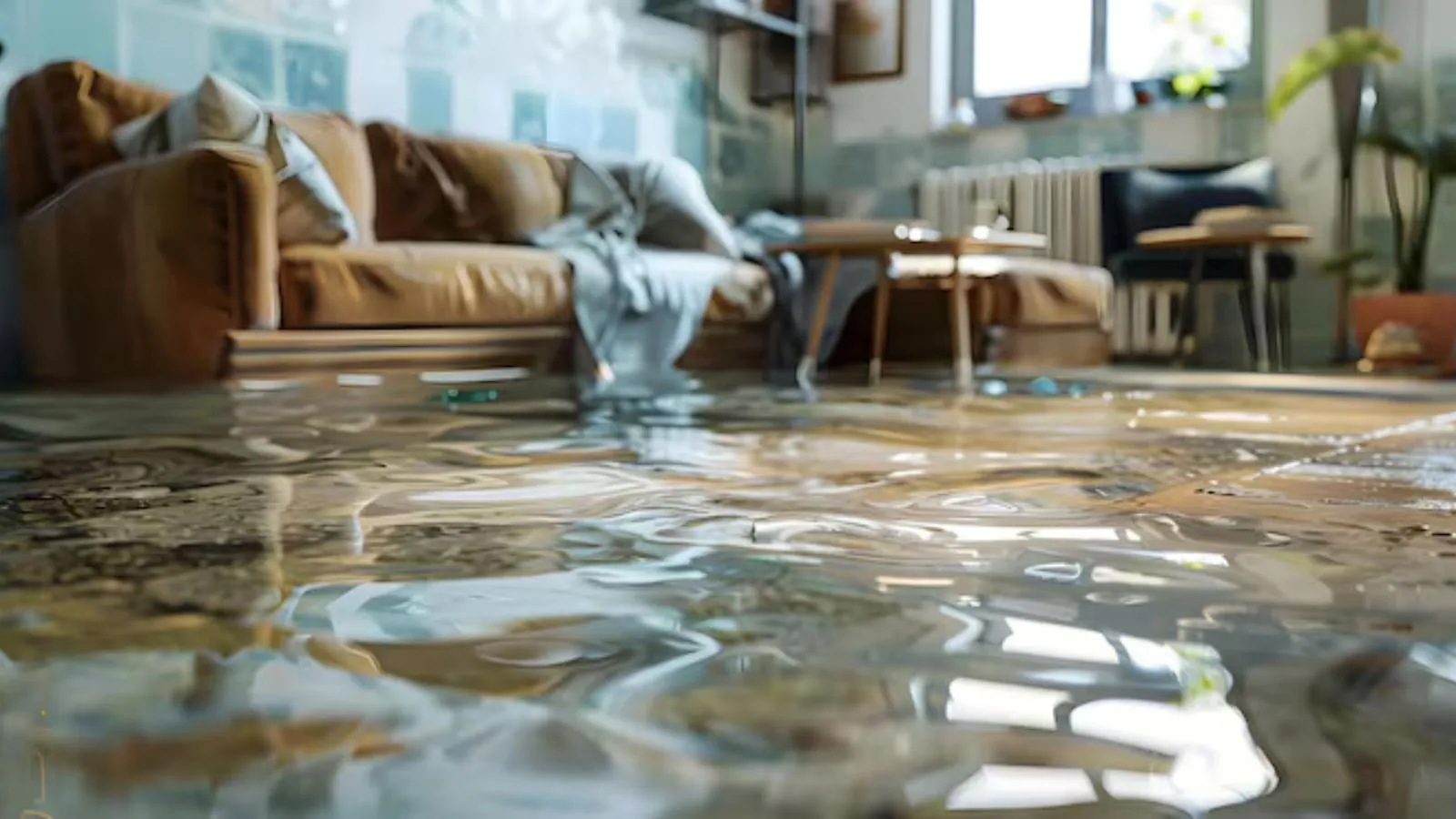
Emergency Flood Damage Restoration in Mastic, NY.
Rising water from storms, tides or heavy rain brings contamination and fast structural damage. Here is how flood cleanup works in Mastic.
Flooding is a 24/7 emergency, and the Mastic line is answered at all hours, including during storms. If water is entering your home, move to higher ground, stay away from the electrical panel, and do not wade through flood water that may be energized or contaminated.
Take photos from a safe spot and note the water line on the walls. Do not run a vacuum or any plugged-in appliance in or near the water.
Flood damage differs from a plumbing leak because the water comes from outside and carries soil, debris and bacteria. This page explains how restoration is handled, why insurance for floods works differently, and what local history says about water in this part of Brookhaven Town.
Floodwater often reaches a basement first, and when drains back up the job shifts to sewage backup cleanup. Bayfront homes are covered on our Mastic Beach page.
Flood Water Is Different From a Pipe Leak.
Water that rises from outside the home passes over yards, roads and storm drains before it reaches the floor. Restoration professionals treat it as contaminated by default, which changes the safety steps, the disposal and what materials can be kept.
Porous items such as carpet, padding, insulation and upholstered furniture are usually discarded after flood contact. Hard surfaces can often be cleaned and dried. A technician checks each material and explains what comes out and why.
Water in This Part of Brookhaven Town.
Mastic sits about 30 feet above sea level near the Forge River, which drains to Moriches Bay. The National Weather Service documented flooding in Mastic Beach during Tropical Storm Irene in 2011, with water as deep as 4 feet reaching about 2,000 feet inland from Moriches Bay.
Superstorm Sandy in 2012 left a large photographic record in Mastic, Mastic Beach and Shirley, with a 250 photo collection preserved by NY Heritage. A nor'easter in January 2024 prompted emergency declarations from the Town of Brookhaven and Suffolk County.
Local note.
Flood zones are address specific. We do not state a zone or a flood history for your property. Check the FEMA Flood Map Service Center for your address and ask the Town of Brookhaven building division what permits apply to repairs.
Flood water in the house?
Call the 24/7 line. We will explain safety steps and what to photograph.
Emergency Steps and How Flood Cleanup Runs.
Safety check.
Electrical, gas and structural hazards are reviewed before anyone works in the water.
Pump out and remove debris.
Standing water is pumped, then mud, silt and wet debris are removed from the floors.
Remove what cannot be saved.
Wet padding, insulation and drywall that cannot be cleaned are removed and bagged.
Clean and dry.
Surfaces are cleaned, then air movers and dehumidifiers dry the structure to normal readings.
For small scale water from a plumbing failure, water extraction is usually the first stop. Larger floods bring in more pumps and more staff, and basement water damage cleanup covers the lower level where flood water ends up first.
Flood Insurance Works Differently.
The New York Department of Financial Services notes that standard homeowners policies do not cover flood. Flood coverage is a separate policy, often through the National Flood Insurance Program. Water back-up and sewage coverage is typically an optional endorsement and is usually excluded when flooding caused the back-up.
If a claim is denied, the insurer should state a reason tied to policy language. We do not decide coverage, and we do not name carriers. We document the loss with photos, moisture logs and a written scope so you have records to give your insurer.
What Changes the Scope and Cost.
Water depth and duration.
Deeper, longer lasting water soaks wall cavities and subfloors.
Contamination.
Flood water adds protective equipment, cleaning and disposal steps.
Square footage affected.
More area means more equipment and more labor.
Structure.
Slab, crawl space and basement foundations each dry differently.
Scope and price are explained before work starts. We do not quote figures without seeing the property.
Reference Standards.
The ANSI/IICRC S500 is the published standard for professional water damage restoration, and it defines water categories 1 to 3 by how contaminated the source is. We cite it as a reference for Flood Damage Restoration and not as a claim about any certification. The EPA advises drying water damaged materials within 24 to 48 hours to limit mold growth.
Questions About Flood Damage Restoration in Mastic.
Yes. The line is answered 24 hours a day, every day, including during storm events. Tell us the street, the depth of the water and whether the power is on.
Standard homeowners policies generally do not cover flood. Flood coverage is a separate policy, and sewer or drain back-up is usually an endorsement. Check your policy and ask your insurer.
Many people cannot. Wet electrical systems, contamination and heavy equipment are the common reasons. We explain safety steps when you call.
Rules vary by the work involved. Ask the Town of Brookhaven building division what applies to your repairs.
Use the FEMA Flood Map Service Center and enter your address. We do not state flood zones for individual properties.
Flood water brings contamination with it.
Call now and we will plan pumping, cleaning and drying.
Call (934) 223-1875.