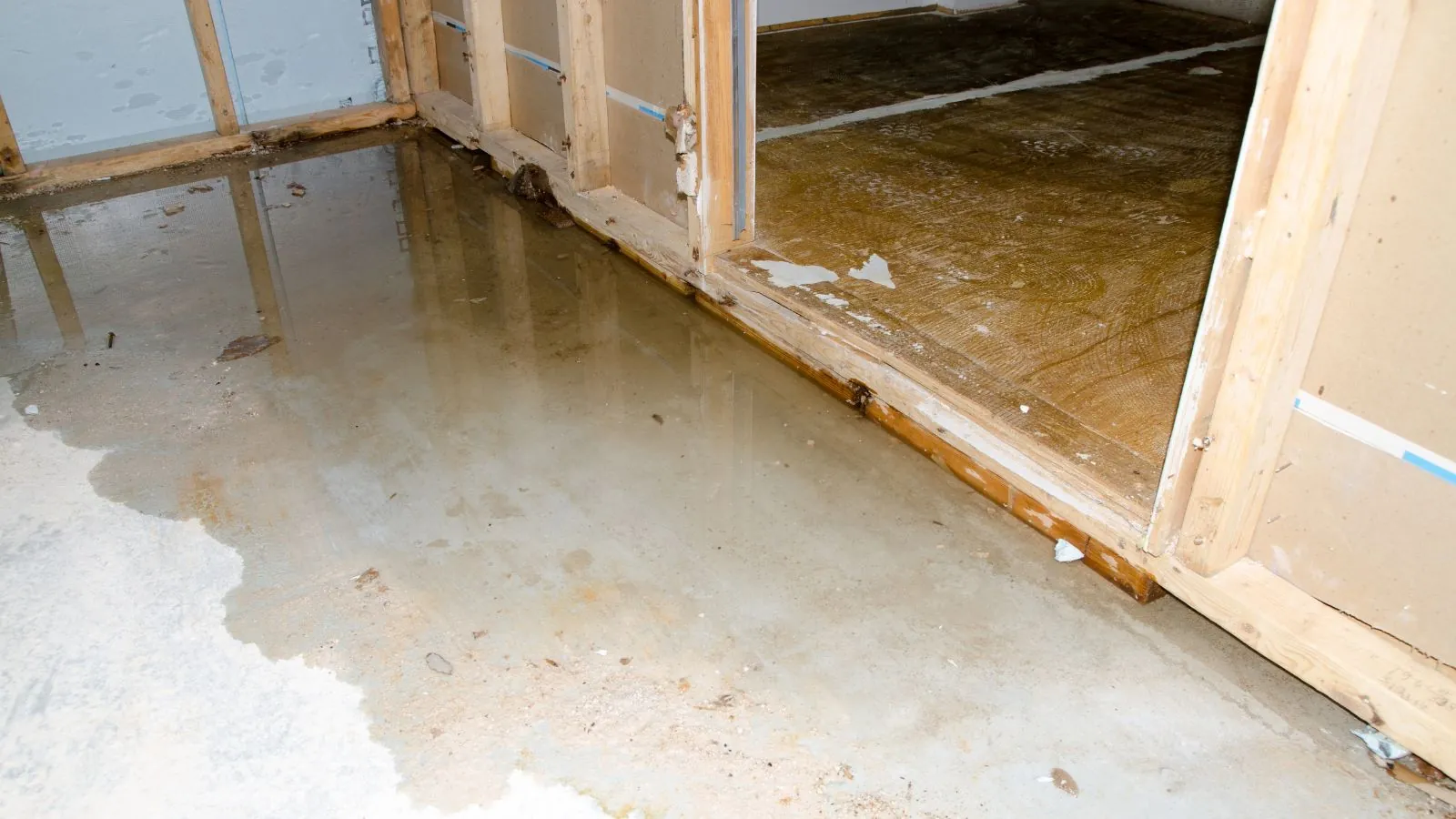
A flooded basement is a 24/7 emergency and the Mastic line answers every hour. Stay out of standing water if the panel, a furnace or outlets are in the room. Switch off power from a dry location or call the utility if you cannot.
Do not go downstairs to move things while water is rising. Take photos from the stairs and note where the water is coming from.
Basements are where storm water, plumbing leaks and drain backups end up, so the source matters as much as the cleanup. This page explains both.
Where Basement Water Comes From.
Heavy rain and groundwater.
Saturated soil pushes water through floor cracks and wall joints.
Plumbing and water heaters.
Pipe failures and tank leaks drain to the lowest floor. See water heater leak cleanup.
Sump pump failure.
A pump that fails or loses power lets water rise.
Drain and sewer backup.
Floor drains can back up. See sewage backup cleanup.
Rain and Water Table in Mastic.
NOAA climate normals for 1991 to 2020 at Upton, nearby, put annual precipitation near 50 inches. Mastic is about 30 feet above sea level, with the Forge River at its southern end, and heavy rain or storm surge can raise the water table.
We do not state a water table depth for your property. If water enters repeatedly, ask the Town of Brookhaven building division what applies and consult a drainage contractor.
Basement taking on water?
Call the 24/7 line. We will explain safety steps and pumping.
Emergency Cleanup Steps.
Make it safe.
Power is off in wet areas and standing water is checked for contamination.
Pump and remove.
Pumps remove water. Wet carpet, padding and stored items come out.
Cut and dry.
Drywall is cut above the water line when wet. Dehumidifiers and air movers dry the space.
Check for mold.
The area is checked for growth, and any found is handled under mold remediation practice.
Finished and Unfinished Basements.
A finished basement has carpet, drywall and trim that absorb water, and there may be framing behind them. An unfinished basement usually has concrete, block and stored items. Concrete dries slowly and may stay damp for a long time.
We explain what to discard and what can be saved as part of the assessment. Wet insulation and drywall are removed because they hold water and encourage mold.
Restoration Is Not Waterproofing.
Cleanup removes water and dries the space. It does not stop water from coming back. If water enters regularly, a drainage or waterproofing contractor addresses the cause, for example grading, gutters, a sump system or foundation sealing.
We explain which part of the job is ours so that you do not expect drying to solve an ongoing entry problem.
Contents, Papers and Electronics in a Wet Basement.
Basements hold more than boxes. Papers, photographs, electronics, holiday decorations and tools often sit on floors or low shelves. Take photos of everything that got wet before you move it, and write a quick inventory while the memory is fresh.
Papers and photographs can sometimes be saved if they are kept wet and dried slowly, so do not throw them away immediately. Electronics that were in water should stay unplugged until a technician checks them. Cardboard boxes that held items often hold mold spores after a day or two and are removed.
Furniture made of solid wood can often be cleaned and dried, and upholstered pieces that touched contaminated water are usually discarded. If the water came from outside, see flood damage restoration for how contaminated contents are handled.
What Changes the Scope and Cost.
Depth and duration.
Deeper water that sits longer saturates framing.
Contamination.
Groundwater and drain water add protective steps.
Finished materials.
Carpet, drywall and trim add removal and rebuild work.
Stored contents.
Boxes and furniture must be moved and sorted.
Reference Standards.
The ANSI/IICRC S500 is the published standard for professional water damage restoration, and it defines water categories 1 to 3 by how contaminated the source is. We cite it as a reference for Basement Water Damage and not as a claim about any certification. The EPA advises drying water damaged materials within 24 to 48 hours to limit mold growth.
Questions About Basement Water Damage in Mastic.
Yes. We answer 24 hours a day, every day. Stay out of water near electrical equipment and call.
No. We restore after water damage. A drainage or waterproofing contractor handles cause and prevention.
Sometimes, if the water was clean and removal was prompt. Contaminated water means carpet is generally discarded.
Keep gutters clear, direct downspouts away, test the sump pump and watch for cracks. A professional can assess drainage.
It depends on whether the water came from plumbing, groundwater or a drain. Flood and back-up coverage are separate. Ask your insurer.
A wet basement does not dry by itself.
Call now and we will plan pumping, removal and drying.
Call (934) 223-1875.