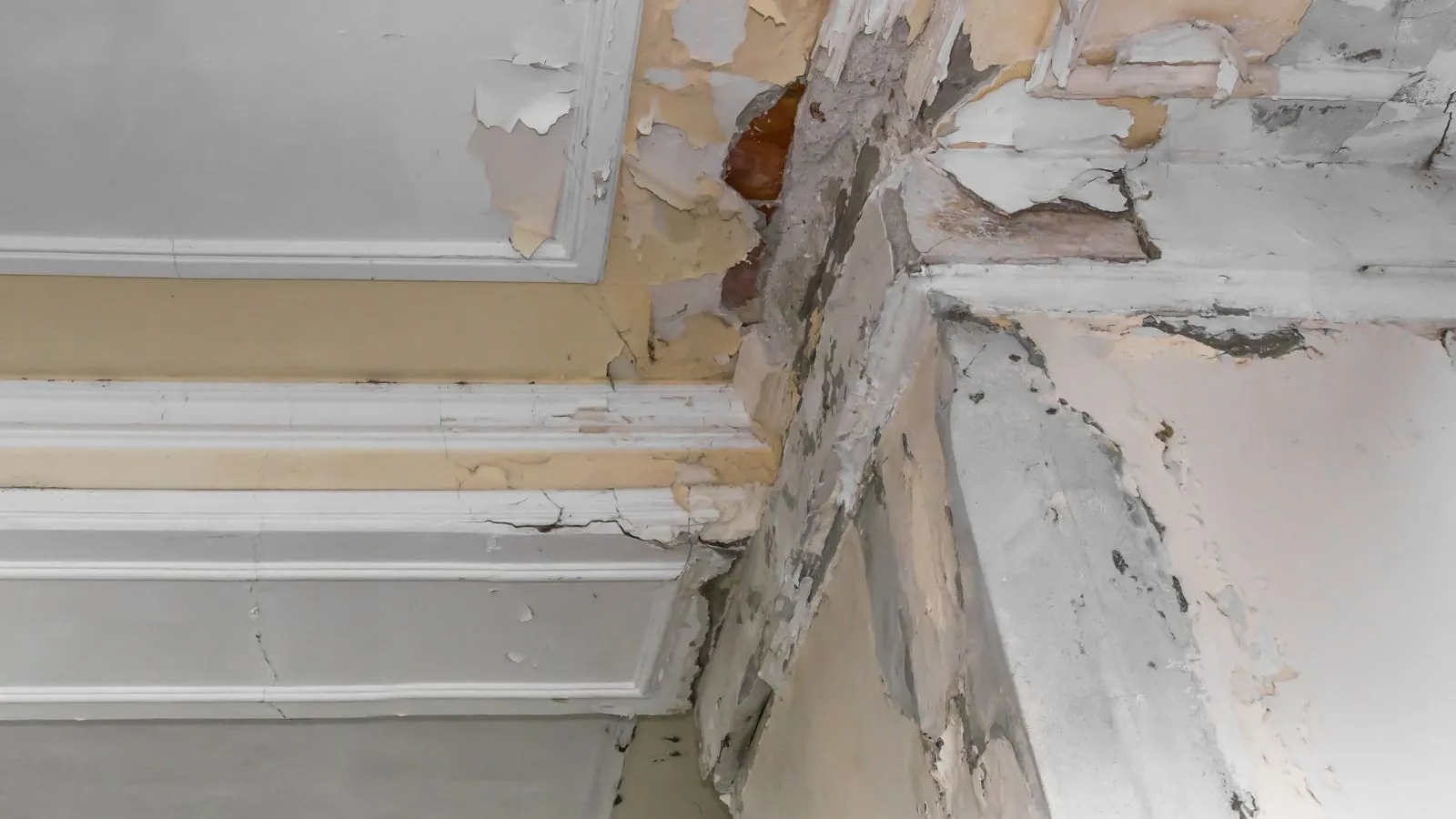
A brown stain on a ceiling does not come with a date. Yet knowing whether water damage is new or old matters for repairs, for selling a home and for insurance.
Fresh damage means a current leak or a recent event. Old damage may mean a past leak that was fixed, or a leak that is still active. This guide covers clues you can see and feel, and the readings that tell you more.
Clues in the Stain.
| Feature. | Looks like a recent leak. | Looks like a long-standing leak. |
|---|---|---|
| Color. | Light tan or yellow, edges soft. | Dark brown or rust with defined edges. |
| Rings. | One ring or no rings. | Several rings from repeated wetting. |
| Texture. | Damp, soft, maybe bulging. | Dry, hard or flaking. |
| Paint. | Bubbling, wet to the touch. | Peeling or cracked. |
| Smell. | Little or none. | Musty odor. |
These are patterns, not proof.
Mastic local note.
The National Weather Service forecast office in Upton issues storm summaries. If a stain appeared right after a storm, the storm date can help you place the damage.
The Town of Brookhaven Division of Building can tell you what permits apply to repairs, and permit records may show past work.
Clues Beyond the Surface.
Soft or crumbling material.
Drywall, wood or plaster that gives under pressure suggests longer exposure.
Rust and corrosion.
Rusty nails, screws and pipe fittings indicate water has been present.
Mineral deposits.
White crusty salts left behind when water evaporates.
Rot and mold.
Fungal growth takes time, so its presence points to longer moisture.
Is the Leak Still Active?
A dry old stain may sit next to a source that still drips. Check the area after rain or use of a fixture. Use a moisture meter, which shows whether the material is wet right now.
If a stain returns after you repaint, the source is still active. Find it before repairs, or the repair will fail. See ceiling water damage repair for how sources are traced.
Tools That Help.
Moisture meter.
Reads moisture inside drywall, wood and plaster.
Thermal camera.
Shows temperature differences that mark wet areas.
Re-inspection.
Check the area after rain or use of a fixture to see if it changes.
Opening the wall.
If the cause is unclear, a small opening shows the cavity.
Why the Date Matters.
For insurance, the date of loss and the type of loss matter. Sudden events are often covered, and long term leaks often are not. Buyers and sellers also care, and a past leak that was repaired should be documented.
Keep records of any repair, including receipts and photographs. Records help show that a past problem was fixed.
Why Stains Come Back.
A stain that returns after painting means moisture is still reaching the surface. Water carries dissolved material from the building, and when it evaporates, that material is left behind as a stain. Ordinary paint does not block it for long.
Stain blocking primer works only after the area is dry and the leak is fixed. Fix the source first, dry the material and then prime. Otherwise the stain returns in a few weeks.
Using Photos Over Time.
Take a photograph of a stain with a coin for scale, and repeat it every few days or after each rain. If it grows or changes color, the source is active. If it does not change, the leak may be old and fixed.
Mark the edge of a stain lightly with a pencil and date it. A new ring outside the line shows that water is still reaching the area. It is a cheap, low tech check.
Sorting a Past Repair From an Active Leak.
If you buy or inspect an older home, you may find stains from a leak that was repaired years ago. Ask the seller or previous owner for records of the repair. A plumber or roofer invoice is the best evidence.
If there are no records, use a moisture meter and re-inspect after rain. A stain that is dry and does not change is likely historic. One that is damp or grows needs attention.
Checking the Roof and Exterior.
A ceiling stain is often a roof problem, but not always. Look for missing shingles, worn flashing around chimneys and vents, clogged gutters and gaps where siding meets trim. Water may travel along framing before it appears inside.
After a storm, a quick look from the ground with binoculars is safer than climbing. Hire a roofer if you see anything unusual, and keep the report with your records.
What To Do While You Decide.
- Photograph what you see before anything is moved or cleaned.
- Fix or shut off the water source if you can do it safely.
- Do not touch electrical items while standing in water.
- Write down dates, readings and who you spoke with.
- Call the line if you want a second opinion on the next step.
Standards and Sources.
The ANSI/IICRC S500 is the published standard for professional water damage restoration, and it defines water categories 1 to 3 by how contaminated the source is. We cite it as a reference for old or new water damage and not as a claim about any certification. The EPA advises drying water damaged materials within 24 to 48 hours to limit mold growth.
Getting a Reading.
If you are unsure, a moisture reading tells you more than guessing. Wall and drywall water damage repair explains how wet walls are tested, and ceiling water damage repair covers ceilings.
We serve Manorville and Upton too.
Questions Readers Ask.
No. Clues give a rough idea, and moisture readings show whether the area is wet now. Exact dating is not possible.
If the source is fixed and the area is dry, an old stain is a cosmetic issue. If it is wet or growing, address the source.
Use a stain-blocking primer after the area is dry and the source is repaired. Painting over a wet area traps moisture.
You cannot tell by looking. A moisture check and an assessor can look, and New York law covers projects larger than 10 square feet.
Check whether it is wet or soft, and whether it grows after rain. A moisture meter and the storm date both help.
Need a hand with the next step?
Call and we will explain scope and price before work starts.
Call (934) 223-1875.